
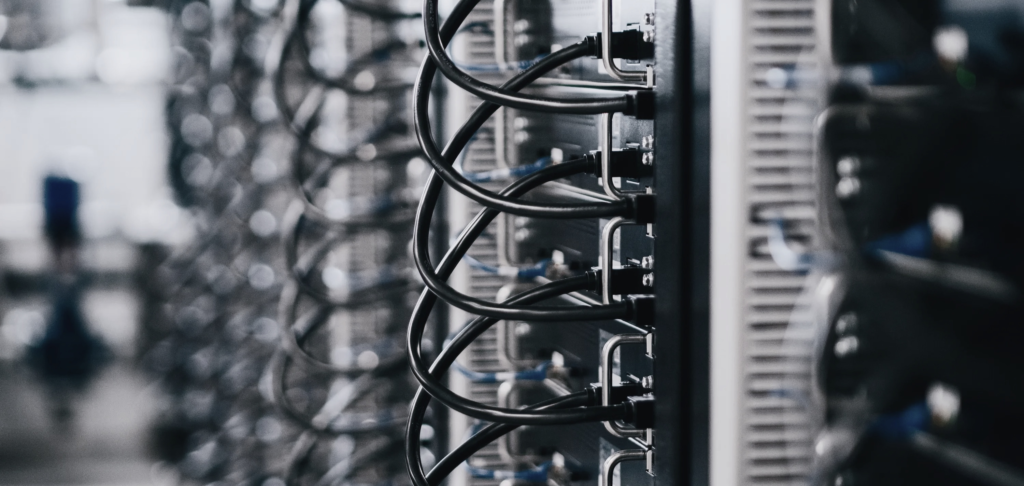
Data centres are often seen as major energy consumers, and it is true that they require significant amounts of electricity. What is less widely recognised is that most of this electricity is ultimately converted into heat – a resource that can be reused as part of local energy systems.
In Finland, waste heat from data centres is increasingly being integrated into district heating networks. As a result, the role of data centres is evolving from purely digital infrastructure to a more active part of the energy system.
A simple principle behind a complex system
Although data centres are technically complex, the principle of waste heat recovery is straightforward. Nearly all electricity used by servers is converted into heat. Without effective cooling, temperatures inside a data centre could rise above 60°C, depending on the scale of operations.
To prevent overheating, efficient cooling systems are essential. In Finland, liquid cooling is commonly used. Contrary to common assumptions, water consumption remains low. Typically, only a few cubic metres of water are introduced into the system, where it circulates in a closed loop for several years.
The heat generated by the equipment is transferred into this circulating water. It is then directed through heat exchangers to a heat pump, which raises the temperature to match the requirements of the district heating network. From there, the heat is fed into the network and used to warm homes, businesses, and other buildings.
Efficient use of energy
The energy use of a data centre is not simply one-directional consumption. Instead, the same energy is utilised for multiple purposes.
Electricity used to operate servers can simultaneously support local heating systems. In some cases, recovered heat can account for a significant share of local heating demand, particularly during periods of lower consumption such as summer months.
“Over 90 percent of the electricity used can be recovered as heat energy, and virtually all of the produced heat is put to use,” says Mikko Rantanen, Technical Operations Manager at MinersLoop.
In addition, certain types of data centres can adjust their electricity consumption based on availability. In Seinäjoki, for example, a data centre focused on Bitcoin mining operates in response to electricity supply conditions.
When electricity is abundant, operations can run at full capacity. When supply is limited, activity can be reduced or temporarily paused without affecting the broader system.
Supporting a more resilient energy system
The utilisation of waste heat also contributes to energy resilience and self-sufficiency.
In Finland, space heating relies largely on domestic energy sources such as district heating, electricity, biomass, and heat pumps. However, part of the energy mix – particularly fossil fuels – has traditionally been imported.
By using locally generated waste heat, dependence on imported energy can be reduced. At the same time, electricity is used more efficiently, as it serves both computational and heating purposes.
Waste heat is inherently local. It is generated where energy is consumed and utilised in the same location. This makes it a stable and predictable energy source, less exposed to fuel price volatility or geopolitical uncertainty.
More broadly, the increased use of waste heat supports the expansion of renewable energy. When electricity consumption can be adjusted flexibly and utilised efficiently, it becomes easier to integrate variable energy sources such as wind and solar power into the system.
Roni Karjalainen
CEO